
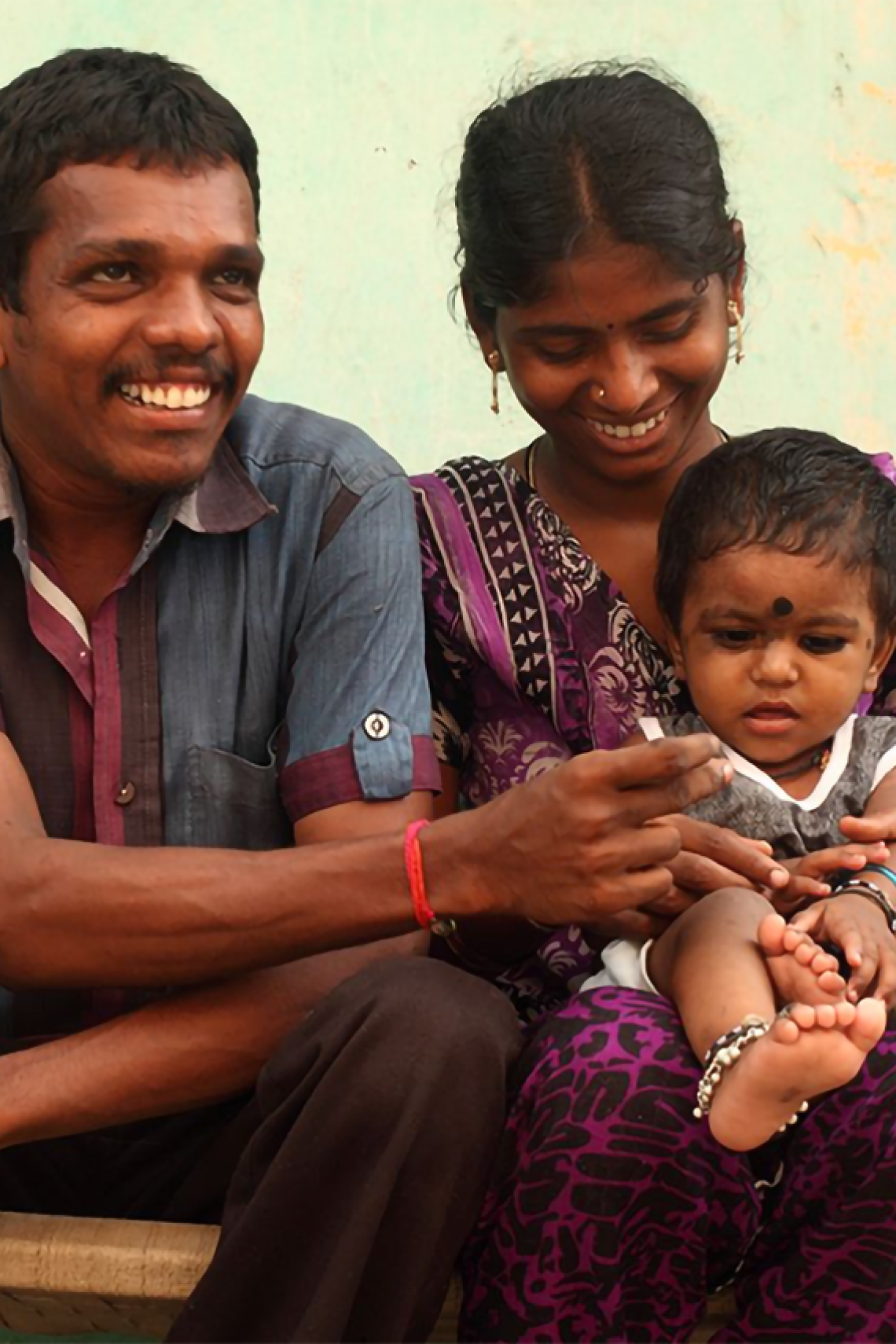
Young Lives announces new research into poverty, inequality and opportunity in India
With support from Echidna Giving, Young Lives will revisit young adults first surveyed 25 years ago to understand how childhood disadvantages, climate shocks and other crises shape opportunities in adulthood, with a particular focus on marginalised young women and the next generation.
Young Lives has received significant new funding of USD $2.6 million from Echidna Giving to continue its research in India, providing a rare opportunity to understand how early childhood experiences shape people’s lives 25 years later.
Over the next three years, the new research will examine participants’ education and skills, health and well-being, employment and family lives, while investigating how major disruptions, including climate-related shocks, the COVID-19 pandemic and other crises, have shaped their opportunities, decisions and migration patterns.
Launched in 2001, Young Lives has followed two age cohorts of children in the Indian states of Andhra Pradesh and Telangana, alongside three other countries in the Global South. Originally comprising around 2,000 participants in each country, the younger cohort in India will be surveyed for the eighth time aged 26-27, providing a unique opportunity to examine the long-term effects of poverty and inequality as they navigate early adulthood.
Young Lives Director Marta Favara said: “This funding comes at a critical moment for Young Lives, enabling us to undertake our eighth round of research in India and continue the ‘Young Lives Birth-to-Thirty’ journey. At a time when research funding is under increasing pressure, particularly in the Global South, this investment is especially significant. It will allow us to continue generating vital longitudinal evidence on how overlapping crises are shaping young people's lives, exacerbating existing inequalities and vulnerabilities, with lasting consequences for their well-being and future opportunities.”
Fieldwork will begin in 2027 and conclude in 2028, using a mixed-methods approach combining large-scale survey data with qualitative research. A particular focus of the Echidna research programme will be on understanding how some marginalised young women have ‘beaten the odds’ by overcoming significant social and economic barriers to pursue opportunities in education, employment and adult life.
Aashti Zaidi Hai, Program Lead, Global Ecosystems, Echidna Giving, commented: “At Echidna Giving, we fund education that reaches the girls furthest behind. While research often tells us what holds marginalised girls back, we know far less about what helps them succeed. Many of the young people in the Young Lives study are now parents, so this round offers a valuable opportunity to understand how their education and attitudes to gender shape their own children’s schooling. This latest round of research will provide governments and partners with practical evidence on when and how to step in to improve outcomes, for both this generation and the next.”
Through in-depth interviews, researchers will explore the experiences, choices, support networks and wider social and structural factors that have shaped their opportunities. By identifying what has helped them succeed, where inequalities persist and which barriers remain, the research aims to inform policies and programmes that expand opportunities for future generations.
Building on more than two decades of research and established partnerships in India, Young Lives will work with national and state governments, UN agencies, NGOs and community groups to help ensure the findings inform policies and programmes addressing poverty, inequality and the needs of disadvantaged young people.
The programme also marks the continuation of a long-standing partnership between Young Lives and Echidna Giving. Previous collaborations include Young Lives’ innovative telephone surveys during the COVID-19 pandemic in 2020 and the Skills for Young Lives podcast in 2024.
Young Lives Deputy Director Kath Ford said: “We are deeply grateful to Echidna for its generous support and hope that other donors will join us to extend the next phase of Young Lives research in Ethiopia, Peru and Vietnam. Expanding the research across all four study countries would generate vital cross-country evidence, deepen our understanding of young people's experiences across different contexts, and help inform more effective policies to improve their lives and shape brighter futures.”
By combining 25 years of longitudinal evidence with young people's lived experiences, the research will provide new insights into how disadvantage persists throughout life — and what can be done to create more equitable opportunities for future generations.
Findings from the eighth round are expected in 2028–29, with open-access data subsequently made available through the UK Data Service.