
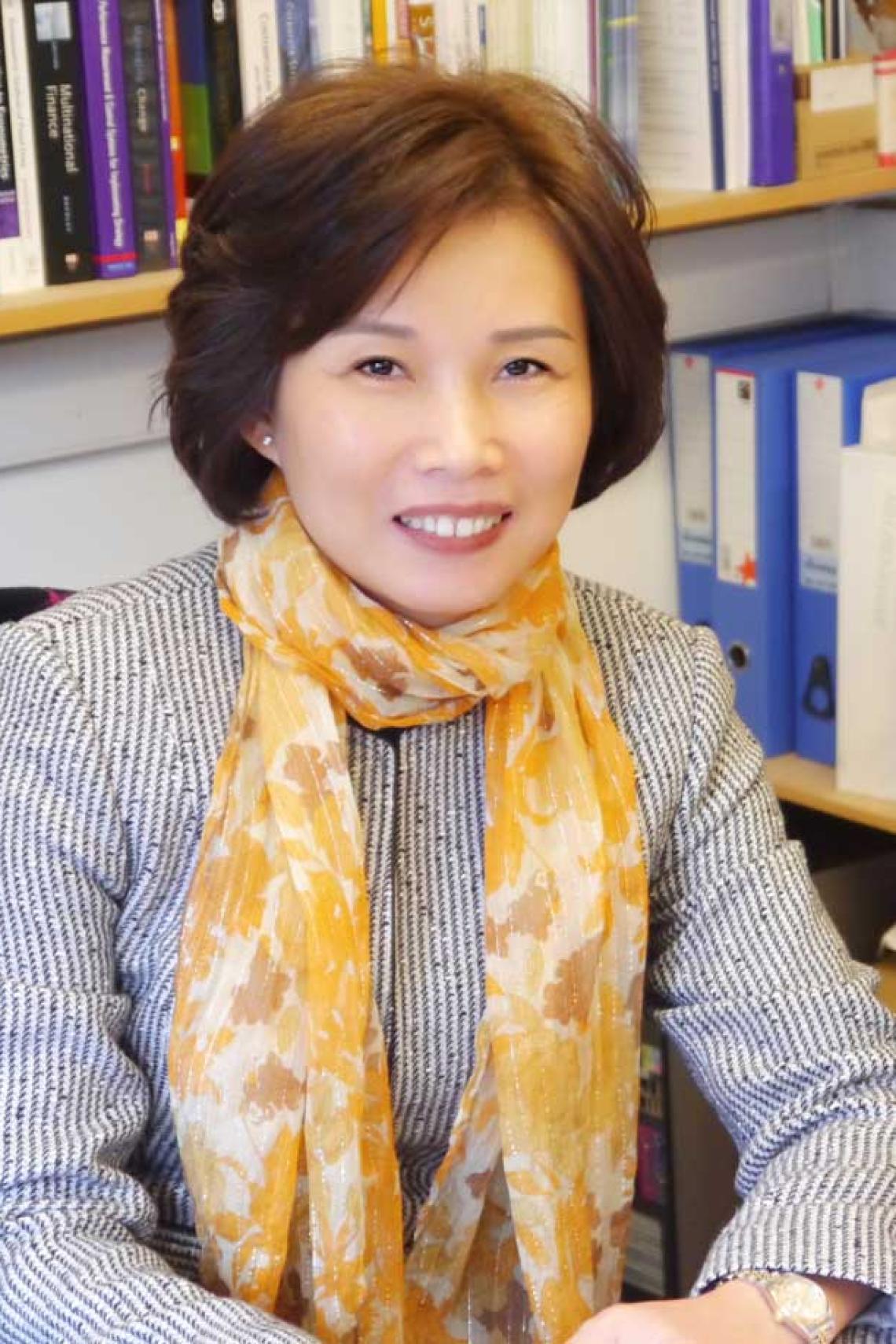
Professor Xiaolan Fu speaks at UN High-Level Political Forum on SDGs
Professor Xiaolan Fu spoke last week at the UN High-Level Political Forum under the auspices of the Economic and Social Council (ECOSOC). She was invited to speak at the concluding plenary session on the ‘Way forward to 2030’ and at a side event on ‘AI for social inclusion’.
With less than four years until the 2030 target year, progress on the Sustainable Development Goals (SDGs) remains insufficient and uneven, with multiple and interlinked global crises continuing to hinder implementation. It is apparent that incremental progress will not suffice. A decisive and accelerated push is urgently required to get the Goals back on track. The 2026 ECOSOC High-Level Segment aimed to serve as a critical platform for reflection on advancing SDG implementation. It focused on identifying concrete actions and strengthening cooperation and partnerships at all levels to effectively accelerate SDG implementation in the remaining years, leading up to 2030.
At the final plenary session themed ‘Way forward to 2030’, Professor Fu stated that:
“With only three years left, facing profound challenges, we need not only action, but also SDG-oriented innovations, both technical and policy and institutional innovations.
“Only through ‘SDG innovation’, can we accelerate the implementation of the 2030 sustainable development agenda; only through innovation, can we turn challenges to opportunities, turning disruptions into tides pushing for inclusive and sustainable development.
“We need SDG-oriented innovation systems, stronger international partnerships, and a new generation of SDG innovations that address the world's most pressing challenges.
“Our task is clear: to align talent, capital, technology, and institutions behind sustainable development outcomes, and to ensure that innovation benefits all of humanity.
“If we can do that, today's disruptions will not define our future. Our response to them will. And through political leadership, collective action, and SDG-oriented innovation, we can build a more inclusive, more sustainable, and more prosperous future for all.”
Earlier, at the side event on AI and inclusive societies, Professor Fu made the following three points:
1. Uncontrollable risks are emerging at the cutting edge of AI research and development, making strengthened governance essential, but so is expanding AI access. Many developing countries still have AI adoption rates below 15%, and below 5% in many cases, excluding China. Governance and inclusion must advance together.
2. AI is not monolithic. The greatest risks come from a small number of frontier technologies, while many mature and trustworthy AI applications are already creating social value. Policy should be science-based, differentiated, and support greater investment in inclusive AI that fosters socio-economic progress.
3. AI-driven development is not just about technology. Its success depends equally on reforms to organizations, markets, and institutions—an essential dimension that is too often overlooked.
The full concluding session on the ‘Way forward to 2030’ is available to watch online here. The session on ‘AI for Social Inclusion’ is online here.